Spicy Tuna Kimbap Quick Easy Recipe
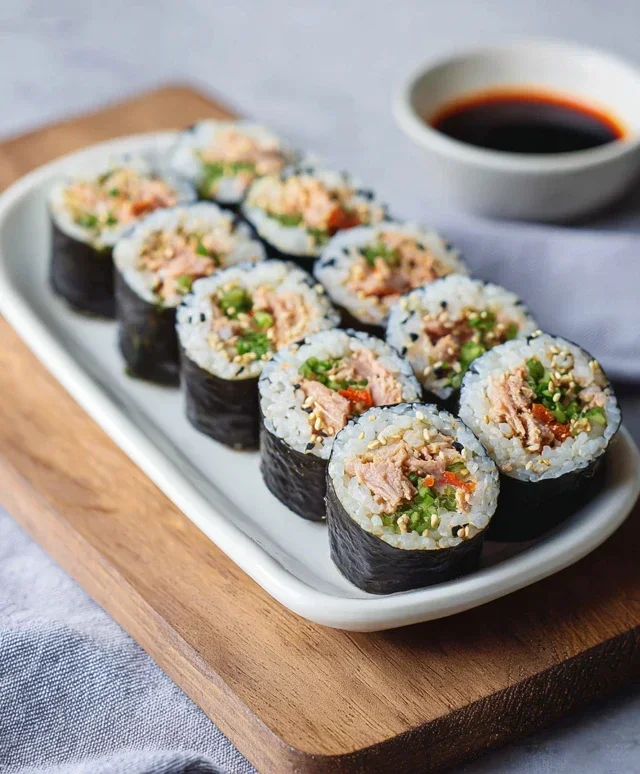
Easy 15-min. Spicy Tuna Kimbap is your weeknight savior and a flavor explosion waiting to happen! If you’re like me, you crave delicious, satisfying meals that don’t demand hours in the kitchen. This recipe delivers exactly that. Kimbap, the Korean rolled sushi, is a beloved dish for its portability, vibrant colors, and incredible taste. What makes this Easy 15-min. Spicy Tuna Kimbap truly special is the perfect balance of textures and the fiery kick from the spicy tuna filling. It’s incredibly versatile – perfect for a quick lunch, a light dinner, or even a picnic. Forget complicated techniques; we’re talking about assembling a masterpiece of flavor and freshness in less time than it takes to decide what to watch on TV. Get ready to impress yourself and anyone lucky enough to share these delightful rolls!
Easy 15-min. Spicy Tuna Kimbap
Craving something delicious, healthy, and incredibly quick? Look no further than this Easy 15-Minute Spicy Tuna Kimbap! Kimbap, often referred to as Korean sushi rolls, is a fantastic way to enjoy a flavorful meal without spending hours in the kitchen. This recipe elevates the classic with a zesty, spicy tuna filling that’s utterly addictive. Perfect for a speedy lunch, a light dinner, or even a satisfying snack, this kimbap will become your new go-to. The beauty of kimbap lies in its versatility and ease of assembly, and with this recipe, you can have a plate of these delightful rolls ready in no time.
Ingredients:
Cooking Instructions:
The beauty of this kimbap recipe is its speed and simplicity. We’re focusing on getting maximum flavor with minimal effort. Let’s dive into how to assemble these delicious rolls.
1. Prepare the Rice: Start by preparing your cooked short-grain rice. It’s crucial that the rice is hot when you season it. In a medium bowl, combine the 2 cups of hot cooked short-grain rice with 1 teaspoon of sesame oil, 1 teaspoon of sesame seeds, and 1 teaspoon of salt. Gently mix everything together using a rice paddle or a spatula. The heat from the rice will help the sesame oil and salt to be absorbed evenly, infusing every grain with a subtle nutty flavor and a hint of saltiness. Avoid mashing the rice; you want the grains to remain distinct. Once seasoned, spread the rice out slightly in the bowl to cool down a little while you prepare the filling. This prevents the rice from becoming clumpy and makes it easier to spread later.
2. Create the Spicy Tuna Filling: This is where the flavor explosion happens! In a separate bowl, drain your canned tuna thoroughly. If you’re using tuna packed in oil, drain as much oil as possible. If using tuna in water, drain it well. Add the drained tuna to the bowl. Then, stir in the 2 tablespoons of very finely chopped green onion. The green onion adds a fresh, sharp bite that cuts through the richness of the tuna and mayo. Next, add the 2 tablespoons of Japanese mayonnaise. Japanese mayo, or Kewpie mayo, is known for its richer, tangier flavor and creamier texture compared to regular mayonnaise, but regular mayo will work perfectly fine too. Finally, add your sriracha. Start with 1 tablespoon if you’re unsure about the spice level, and gradually add more until you reach your desired heat. For a deeper, more complex spice, you can also use gochujang, a Korean chili paste, instead of sriracha. Mix all the ingredients together until well combined and the tuna is coated in the creamy, spicy mixture. Taste and adjust seasoning if needed – you might want a touch more sriracha or even a pinch of salt.
3. Assemble the Kimbap Rolls: Lay one sheet of nori shiny-side down on a clean, dry surface or a bamboo sushi mat (if you have one). Imagin extracte the nori is a landscape, with the longer side facing you. Now, evenly spread about half of the seasoned rice over the nori, leaving a 1-inch border at the top edge (the edge furthest from you). This border will help seal the roll. Gently press the rice down so it forms a thin, even layer. Next, lay two perilla leaves horizontally across the rice, about a third of the way up from the bottom edge. The perilla leaves add a unique herbal aroma and a slightly peppery flavor that complements the tuna filling beautifully. If you don’t have perilla leaves, washed and dried green leaf lettuce works as a great substitute, offering a similar fresh crunch.
4. Add the Filling and Roll: Spoon half of the spicy tuna mixture in a line horizontally over the perilla leaves. Try to keep the filling relatively contained to make rolling easier. Now, it’s time to roll! Starting from the edge closest to you, carefully lift the nori and rice, tucking the filling in. Use your fingers to guide the filling as you begin extract to roll the kimbap tightly. Roll it forward, applying gentle pressure to keep the roll firm. As you roll, continue to press the rice and filling together. When you reach the end of the rice, use the empty border of the nori to seal the roll. You can moisten this border with a little water if needed to help it stick. Repeat this entire process with the remaining half of the rice, spicy tuna filling, and the second sheet of nori and perilla leaves.
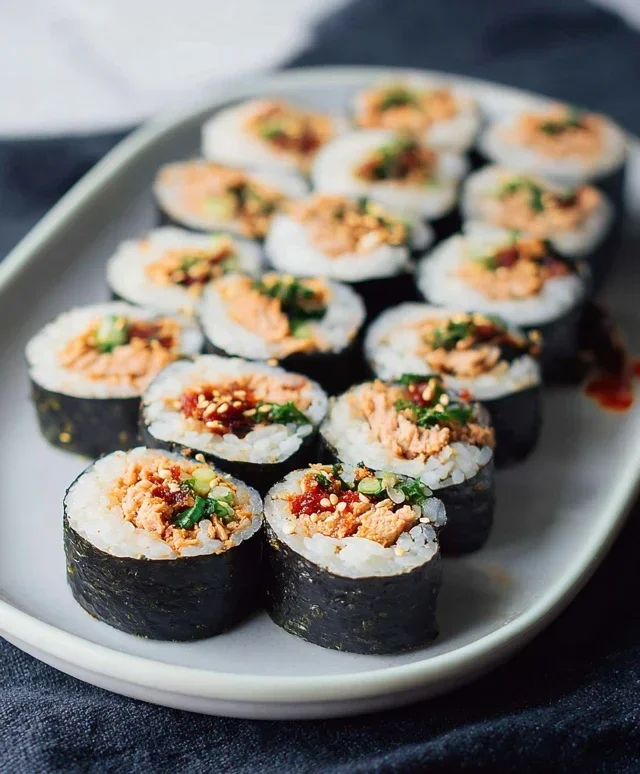
5. Slice and Serve: Once your kimbap rolls are assembled and senon-alcoholic aled, it’s time to slice them. For the cleanest cuts, it’s best to use a sharp knife. Lightly dampen the knife with water before slicing. This prevents the rice from sticking to the blade. Slice each roll into 6-8 bite-sized pieces. Arrange the kimbap slices on a serving platter. Finally, drizzle the assembled kimbap with the remaining 1/2 teaspoon of sesame oil and sprinkle with the 1/2 teaspoon of sesame seeds for a beautiful finish and an extra burst of nutty aroma. Serve immediately and enjoy your incredibly quick and delicious Spicy Tuna Kimbap! This dish is fantastic on its own or can be served with a side of soy sauce for dipping.
Conclusion:
And there you have it! Our Easy 15-min. Spicy Tuna Kimbap is more than just a quick meal; it’s a flavor explosion packed into a convenient and satisfying roll. The beauty of this recipe lies in its simplicity, allowing you to create a delicious and wholesome dish even on your busiest days. The perfect balance of spicy tuna, seasoned rice, and crisp vegetables makes it a delightful option for lunch, a light dinner, or even a portable snack. We encourage you to give this recipe a try – you’ll be amazed at how easy and rewarding it is!
For serving, enjoy your Spicy Tuna Kimbap as is, or pair it with a side of kimchi or a light soy-sesame dipping sauce. If you’re feeling adventurous, consider variations! You could swap the spicy tuna for regular tuna mixed with sriracha, add some avocado for creaminess, or even incorporate finely chopped pickled radish for an extra tangy crunch. The possibilities are endless!
Frequently Asked Questions:
What kind of rice should I use for this kimbap?
For the best results, we recommend using short-grain or medium-grain sushi rice. It has the right amount of stickiness to hold the kimbap together beautifully.
Can I make this recipe vegetarian?
Absolutely! You can easily adapt this recipe to be vegetarian. Instead of tuna, try using seasoned mashed tofu mixed with your favorite spicy sauce, or sautéed mushrooms for a savory alternative.
How should I store leftover Spicy Tuna Kimbap?
Leftover kimbap is best stored in an airtight container in the refrigerator for up to 2 days. For optimal freshness, try to consume it within the first day.
Easy 15-min. Spicy Tuna Kimbap
Quick and flavorful Korean seaweed rice rolls filled with spicy tuna, perfect for a fast meal.
Ingredients
-
2 sheets nori (or gim (dry roasted seaweed))
-
4 perilla leaves (washed & dried with stems trimmed (or sub with green leaf lettuce))
-
2 cups cooked short grain rice (hot)
-
1 tsp sesame oil
-
1 tsp sesame seeds
-
1 tsp salt
-
5.3 oz canned tuna in oil (or canned tuna in water)
-
2 tbsp green onion (very finely chopped)
-
2 tbsp Japanese mayo (aka Kewpie mayo (or regular mayo))
-
1-2 tbsp sriracha (depending on your spice tolerance (or sub with gochujang))
-
1/2 tsp sesame oil (to season kimbap)
-
1/2 tsp sesame seeds (to garnish kimbap)
Instructions
-
Step 1
In a bowl, combine the hot cooked rice with 1 tsp sesame oil, 1 tsp sesame seeds, and 1 tsp salt. Mix well. -
Step 2
Drain the canned tuna. In a separate bowl, flake the tuna and mix it with the finely chopped green onion, Japanese mayo, and sriracha. Adjust sriracha to your spice preference. -
Step 3
Place a sheet of nori, shiny side down, on a bamboo sushi mat or a clean surface. Spread half of the seasoned rice evenly over the nori, leaving about 1 inch at the top edge bare. -
Step 4
Layer two perilla leaves over the rice, followed by half of the spicy tuna mixture, spread horizontally across the center. -
Step 5
Carefully roll up the kimbap from the bottom, using the mat to help shape it tightly. Moisten the bare edge of the nori with a little water to seal the roll. -
Step 6
Repeat with the second sheet of nori and remaining ingredients. Brush the outside of the rolls with a little sesame oil and sprinkle with sesame seeds. -
Step 7
Slice the kimbap into bite-sized pieces using a sharp knife.
Important Information
Nutrition Facts (Per Serving)
It is important to consider this information as approximate and not to use it as definitive health advice.
Allergy Information
Please check ingredients for potential allergens and consult a health professional if in doubt.