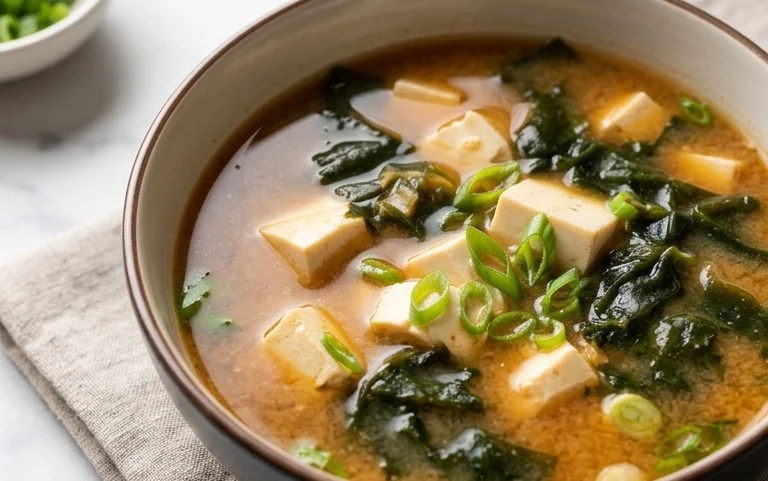
Easy Miso Soup Recipe – Quick & Delicious Japanese Comfort
Miso soup recipe is a doorway to pure, soul-warming comfort. More than just a starter, it’s an experience – a gentle embrace that transports you to a serene Japanese eatery with every delicate spoonful. What is it about this humble broth that captures so many hearts? It’s the unparalleled depth of flavor, the subtle umami kick from the fermented soybean paste, and the sheer versatility that allows it to be customized for any occasion. For me, making miso soup is a ritual, a moment of quiet creation that yields a dish that is both profoundly satisfying and incredibly healthy. Its magic lies in its simplicity and the inherent goodness of its core ingredient, the humble yet mighty miso. Ready to bring this culinary hug into your own kitchen?
Miso Soup Recipe
There’s something incredibly comforting and deeply satisfying about a warm bowl of miso soup. It’s a staple in Japanese cuisine, a dish that can be both a simple starter or a nourishing meal in itself. The beauty of miso soup lies in its simplicity, allowing the complex, umami-rich flavors of miso to shine. This recipe is my go-to for a quick, delicious, and authentic miso soup that I can whip up any day of the week. It’s incredibly adaptable, but this foundational version provides a fantastic base.
The key to a great miso soup is the dashi, which is a Japanese soup stock. While you can buy instant dashi granules, making your own from scratch (or using high-quality dashi packets) will elevate your soup to another level. The subtle, oceanic notes from the dried seaweed also contribute significantly to the overall flavor profile. And of course, the miso paste itself is the star. There are many varieties of miso, each offering a slightly different flavor. Red miso tends to be more robust and salty, white miso is sweeter and milder, and yellow miso falls somewhere in between. Feel free to experiment with your favorite!
This recipe is designed for ease and speed, making it perfect for a weeknight dinner or a light lunch. The silken tofu adds a lovely creamy texture that melts in your mouth, while the fresh scallions provide a bright, sharp finish. Don’t be afraid to customize! Some people like to add mushrooms, wakame seaweed (if you want extra seaweed), or even a splash of soy sauce if you feel it needs an extra savory kick. But for now, let’s focus on mastering this fundamental, delicious version.
Ingredients:
Cooking Instructions
The process of making miso soup is remarkably straightforward. It’s all about building layers of flavor gently. The most crucial step is to never boil the miso paste. Boiling miso can destroy its delicate flavor and beneficial probiotics, so remember to keep the heat low once the miso is added.
1.
Preparing the Dashi and Seaweed
Begin extract by preparing your dashi. If you’re using dashi granules, follow the package instructions to mix them with water. If you’re using a dashi pack, simmer it in water according to the instructions. While the dashi is heating, take your dried seaweed. You’ll want to rehydrate it. Place the dried seaweed in a small bowl and cover it with warm water. Let it soak for about 5-10 minutes, or until it has softened and expanded. Once rehydrated, drain off any excess water and set it aside. This rehydrated seaweed will add a pleasant chegrape juicess and a boost of oceanic flavor to your soup.
2.
Heating the Dashi and Adding Seaweed
Once your dashi is ready and simmering gently (not boiling), add the rehydrated seaweed to the pot. Stir it in and let it simmer for a couple of minutes. This allows the seaweed to infuse its flavor into the dashi, creating a more complex base for your soup. The seaweed will continue to soften slightly as it simmers. Taste the dashi at this point; it should be savory and have a subtle hint of the sea. If you’re using a very basic dashi, you might consider adding a tiny pinch of salt if you think it needs it, but usually, the miso paste will provide enough saltiness.
3.
Incorporating the Tofu
Now it’s time to add the silken tofu. Gently slide the small pieces of silken tofu into the simmering dashi and seaweed mixture. Be very careful when handling silken tofu as it can break apart easily. Use a spoon to gently submerge the tofu pieces if they float. Allow the tofu to heat through for about 2-3 minutes. You don’t want to cook it vigorously, just warm it up so it’s pleasant to eat. The silken tofu will absorb some of the dashi flavors as it warms.
4.
Dissolving the Miso Paste
This is the most critical step for achieving the best flavor. In a separate small bowl or ladle, scoop out your desired amount of miso paste. Add a small amount of the warm dashi (about a ladleful) from the pot into the bowl with the miso paste. Use a whisk or a fork to thoroughly dissolve the miso paste, breaking up any clumps until you have a smooth, liquid mixture. It’s important to do this in a separate bowl because if you add the miso paste directly to the boiling soup, it can clump and lose its delicate flavor. This pre-dissolving method ensures that the miso is evenly distributed throughout the soup.
5.
Finishing the Soup
Once the miso paste is fully dissolved into a smooth slurry, gently pour this mixture back into the pot of dashi, seaweed, and tofu. Stir gently to combine. Now, reduce the heat to the lowest possible setting. You want the soup to be piping hot but absolutely not boiling. Simmer for just another minute or two to ensure everything is heated through. Overcooking at this stage will diminish the miso’s wonderful aroma and flavor. Taste your soup and adjust the miso paste if necessary. Add a little more miso if you prefer a stronger flavor, dissolving it in a small amount of warm dashi first, then adding it to the pot.
6.
Serving Your Miso Soup
Ladle the hot miso soup into your serving bowls. Make sure each bowl gets a good portion of the tofu and seaweed. Finally, sprinkle the chopped scallions over the top of each bowl just before serving. The fresh, sharp taste of the scallions provides a beautiful contrast to the rich, savory broth. Enjoy your homemade miso soup immediately! It’s best served fresh and warm, perfect for a light start to a meal or a comforting solo dish.
Conclusion:
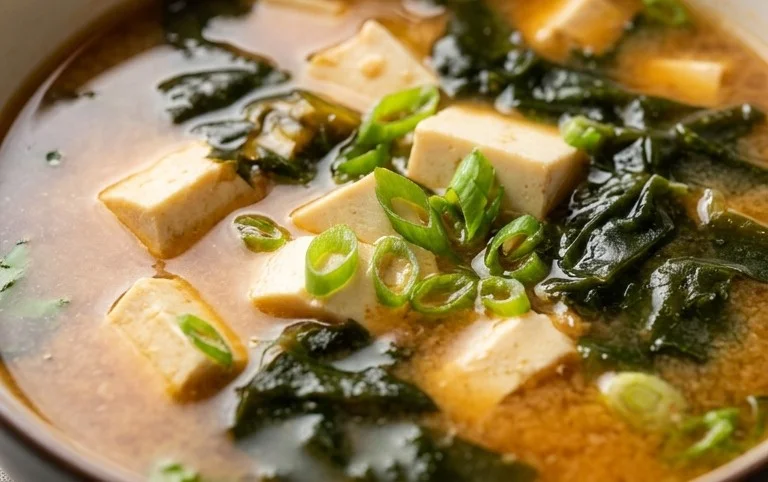
And there you have it! Our simple and authentic Miso Soup Recipe is your gateway to a bowl of pure comfort and deliciousness. This recipe shines because it’s incredibly quick to prepare, yet delivers a depth of flavor that’s both savory and satisfying. It’s the perfect starter for any meal, a light lunch, or even a comforting evening treat. The subtle umami notes of miso, combined with fresh ingredients, create a truly nourishing experience.
We love serving this miso soup alongside grilled fish, sushi, or even as a palate cleanser before a heartier dish. Don’t be afraid to get creative with your toppings! Add silken tofu cubes for extra protein, a sprinkle of toasted sesame seeds for crunch, or a few finely chopped scallions for a fresh bite. For those seeking variations, consider adding a handful of baby spinach in the last minute of cooking, or experiment with different types of miso – red miso offers a bolder flavor, while white miso is milder and sweeter.
We truly encourage you to give this easy miso soup recipe a try. It’s a testament to how simple ingredients can create something so wonderful. So, gather your ingredients, embrace the process, and savor every spoonful!
Frequently Asked Questions:
What kind of miso paste should I use for this recipe?
For this basic recipe, white miso paste (shiro miso) is a fantastic choice as it offers a mild, slightly sweet, and delicate umami flavor that’s very versatile. However, you can absolutely experiment! Red miso paste (aka miso) will give you a deeper, more robust, and saltier flavor. A blend of white and red miso can also create a wonderfully complex taste.
Can I add other vegetables to my miso soup?
Absolutely! Miso soup is incredibly forgiving and adaptable. Besides the traditional ingredients, feel free to add sliced shiitake mushrooms, thinly sliced carrots, bok choy, daikon radish, or even some wilted spinach or knon-alcoholic ale towards the end of the cooking time. Just be mindful of cooking times for harder vegetables.
How do I prevent my miso soup from becoming bitter?
The key to avoiding bitterness is to never boil the miso paste. Once you’ve whisked the miso into a small amount of warm broth (a process called ‘tempering’), gently add it back to the soup off the heat. Allow it to dissolve and meld with the other flavors, but avoid bringin extractg the soup back to a rolling boil after the miso has been added.
Miso Soup Recipe
A simple and quick recipe for classic Japanese miso soup.
Ingredients
-
2½ cups Dashi
-
1 heaping tablespoon dried seaweed
-
4 oz silken tofu (cut into small pieces)
-
2-2½ tablespoons miso paste (or to taste)
-
1 tablespoon scallion (chopped)
-
1 teaspoon dried shiitake mushrooms
Instructions
-
Step 1
In a medium saucepan, bring the Dashi to a simmer over medium heat. -
Step 2
Add the dried seaweed and dried shiitake mushrooms to the simmering Dashi and cook for 3-5 minutes, until the seaweed is rehydrated. -
Step 3
While the seaweed is rehydrating, prepare a small bowl with some of the hot Dashi and whisk in the miso paste until it’s fully dissolved. This prevents clumping. -
Step 4
Gently add the silken tofu pieces to the saucepan. -
Step 5
Stir the dissolved miso mixture into the saucepan. Do NOT boil the soup after adding the miso, as this can diminish its flavor and beneficial properties. -
Step 6
Heat for another minute until the tofu is warmed through. -
Step 7
Ladle the soup into bowls and garnish with chopped scallions before serving.
Important Information
Nutrition Facts (Per Serving)
It is important to consider this information as approximate and not to use it as definitive health advice.
Allergy Information
Please check ingredients for potential allergens and consult a health professional if in doubt.